TOP 5 Heat Sinks TOP 5 Low Profile Heat Sinks TOP 5 Liquid Coolers
Heatsinks by Brand / Mfgr Reviews + Articless Advanced Search
|
TOP 5 Heat Sinks TOP 5 Low Profile Heat Sinks TOP 5 Liquid Coolers Heatsinks by Brand / Mfgr Reviews + Articless Advanced Search |
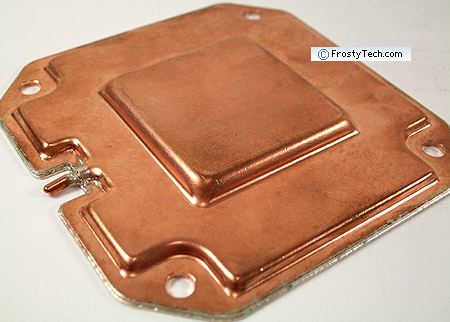
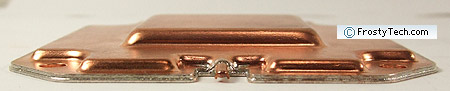
On hot days going outside into the heat and humidity can really drain your energy fast. It also makes us at Frostytech think about how tough it can be on computers that endure non-airconditioned environments... After all, the one common limitation of all heatsinks is ambient temperature. If the ambient temperature inside the PC case is 50°C, the heatsink can't fix that. If the ambient temperature outside is 35°C, inside the PC is bound to be a lot hotter still, and the best a heatsink can do is reduce CPU temperatures to maybe 15-20°C above ambient... Any way you look at it, it's hot. Since today is bugger of a hot one, I thought it might be fun to depart from the usual pixel fodder and take a brief look at a few cool technologies you've (likely) never seen before, touch on some fun tests from Frostytech's unpublished archives, and collect all the thermodynamics research we've reported on recently into one location. Feedback is welcome, as are tips about new cooling technologies. 1) Vapour Champer Heat Spreader Vapour chambers work on the same principle as heatpipes, but instead of taking on the shape of a thin copper tube that conducts heat from one end to another, vapour chamber heat spreaders are large flat pads that spread the heat around. Compared to a solid block of copper of the same dimensions, vapour chambers are several times more efficient at conducting heat. Frostytech managed to secure an LGA775 compatible vapour chamber at Computex last year, and I have to admit it's a pretty cool piece of "solid state" technology. The speed of its heatspreading abilities is quite amazing. In fact, we're a little surprised that more thermal solutions manufacturers haven't adopted this type of heatspreader. It is quite literally the ultimate in "heatpipe direct touch" / "exposed heatpipe base" solution out there.
If I recall correctly, Glacialtech had taken this thin vapour chamber and formed a 1U server heatsink out of it by bonding short copper fins directly to the top of it.
|
 |
|
| |||||||||||||||||||||||
|
Find a Heatsink . Latest Heatsink Reviews . Top 5 Heatsinks Tested . Top 5 Low Profile Heatsinks . Top 5 Liquid Coolers . Heatsinks by Mfgr / Brand |
Social Media |
FrostyTech.com Info . Feedback . Contact Us / Heatsink Submissions . Submit News . Privacy Policy |
 | |
© Copyright 1999-2025 www.frostytech.com All Rights Reserved. Privacy policy and Terms of Use Images © FrostyTech.com and may not be reproduced without express written permission. Current students and faculty of accredited Universities may use Frostytech images in research papers and thesis, provided each image is attributed. | ||||