TOP 5 Heat Sinks TOP 5 Low Profile Heat Sinks TOP 5 Liquid Coolers
Heatsinks by Brand / Mfgr Reviews + Articless Advanced Search
|
TOP 5 Heat Sinks TOP 5 Low Profile Heat Sinks TOP 5 Liquid Coolers Heatsinks by Brand / Mfgr Reviews + Articless Advanced Search |
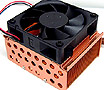
AVC Z7H2403012 Internal Prism Base Heatsink Review What is the newest trend in heatsink thermal design? Hint, it's not heat pipes, prolific amounts of copper, phase change materials or cold forging - it's the "Internal Prism Base." If that seems unclear, just imagine that the copper base of the AVC Z7H2403012 heatsink, pictured below, is in the shape of an obtuse triangular prism - about 67mm long, 13mm high, and 51mm wide. The widest side of this copper prism sits directly on top of the processor core, and the two smaller sides are soldered to the copper fins above. Thermalright have been using a similar process with their heatsinks for quite some time, but as their base sections are split down the center to leave space for the clip, it isn't quite the same concept. The closest example of the IPB we can compare this AVC heatsink to is the Novasonic-AlCu from Tocools, or the Thermal Integration TI-A8736N. Tocools have to be credited with applying the first example of this thermal design technique, however.
In that adaptation, the heatsink was manufactured
from a solid block of aluminum, and featured a rather tall internal prism shape.
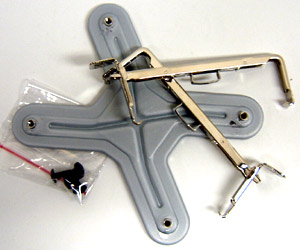
Assuming the solder joints between the IPB and 45 thin copper fins is good, we should be looking a Pentium 4 heatsink that is a force to be reckoned with... right? I tried loosening the screws which hold the aluminum fan shroud in place so we could get a better look at the IPB inside, but no luck there - the heads just stripped right off and wrecked my screwdriver in the process... Along with the heatsink and fan, AVC bundle in a set of clips, the socket 478 frame, and the X-Pad motherboard support frame. Because of the weight of heatsinks these days, and the forces the clips apply, it is important to support the motherboard PCB from bending.
|
 |
|
| |||||||||||||||||||||||||||||
|
Find a Heatsink . Latest Heatsink Reviews . Top 5 Heatsinks Tested . Top 5 Low Profile Heatsinks . Top 5 Liquid Coolers . Heatsinks by Mfgr / Brand |
Social Media |
FrostyTech.com Info . Feedback . Contact Us / Heatsink Submissions . Submit News . Privacy Policy |
 | |
© Copyright 1999-2025 www.frostytech.com All Rights Reserved. Privacy policy and Terms of Use Images © FrostyTech.com and may not be reproduced without express written permission. Current students and faculty of accredited Universities may use Frostytech images in research papers and thesis, provided each image is attributed. | ||||
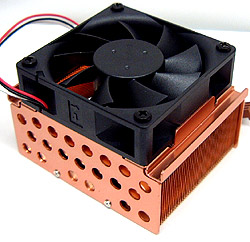


 With the AVC Z7H2403012 heatsink, Asia Vital has adapted the
stacked copper fin process, and soldered the fins directly to the upper half of
the solid copper internal prism base.
With the AVC Z7H2403012 heatsink, Asia Vital has adapted the
stacked copper fin process, and soldered the fins directly to the upper half of
the solid copper internal prism base.