TOP 5 Heat Sinks TOP 5 Low Profile Heat Sinks TOP 5 Liquid Coolers
Heatsinks by Brand / Mfgr Reviews + Articless Advanced Search
|
TOP 5 Heat Sinks TOP 5 Low Profile Heat Sinks TOP 5 Liquid Coolers Heatsinks by Brand / Mfgr Reviews + Articless Advanced Search |
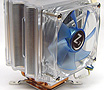
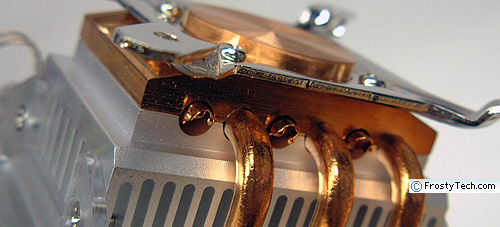
intel processors vary widely in heat output between single and multi-core processors, so frostytech relies upon on two different thermal values to represent the upper limits of existing intel single and multi-core cpu families. first off, a 150w heat load was applied by the intel lga775 version of frostytech's synthetic thermal test platform to the Rosewill RCX-Z3 heatsink. This yielded a rise above ambient temperature of 23.3°C, with 58.6dBA noise. That's a good result, but not low enough to be considered top of the line... and nearly 60 dBA is somewhat loud. The Rosewill RCX-Z3 heatsink was next tested with an 85W heat load. In this case the heatsink maintained a good 14.0°C temperature over ambient at full fan speed. As fan speed was reduced to low noise mode, the heatsink reacted in a predictable manner - the synthetic CPU die temperatures rose to 25.4°C. Clearly as we can see from the synthetic thermal test results here, the Rosewill RCX-Z3 heatsink is only really able to shine when its fan is loudly spinning away at full RPM. As the volume of airflow passing through its many aluminum fins decreases, the heatsink quickly looses effectiveness and the plastic fan shroud starts trapping the heat in. In the end, we're left wondering if it would be better ditching the blue LEDs and plastic fan shroud entirely so the heatsink could potentially be operated with a quieter fan. As it stands, the Rosewill RCX-Z3 is only worthwhile when going at full tilt, and then it is just too loud for modern day computer users to accept. Related Articles: For more reviews on the latest heatsinks and
cooling solutions, rely on FrostyTech's inventory of 350+ heatsink reviews. Here are a
few other articles that you might enjoy as well...
- Xigmatek
AIO-S80DP Self-Contained Watercooling Heatsink Review
|
 |
|
| ||||||||||||||||||||||||||||||||||||||||||||||||||||||||||||||||||||||||||||||||||||||||||||||||||||||||||||||||||||||||||||||||||||||||||||||||||||||||||||||||||||||||||||||||||||||||||||||||||||||||||||||||||||||||||||||||||||||||||||||||||||||||||||||||||||||||||||||||||||||||||||||||||||||||
|
Find a Heatsink . Latest Heatsink Reviews . Top 5 Heatsinks Tested . Top 5 Low Profile Heatsinks . Top 5 Liquid Coolers . Heatsinks by Mfgr / Brand |
Social Media |
FrostyTech.com Info . Feedback . Contact Us / Heatsink Submissions . Submit News . Privacy Policy |
 | |
© Copyright 1999-2025 www.frostytech.com All Rights Reserved. Privacy policy and Terms of Use Images © FrostyTech.com and may not be reproduced without express written permission. Current students and faculty of accredited Universities may use Frostytech images in research papers and thesis, provided each image is attributed. | ||||

 When the 92mm PWM fan speed
was dropped down to about 1200RPM,
temperatures rose to 42.4°C over ambient, while noise levels fell down to a
much more reasonable 45.6 dBA. When faced with a 150W heat load,
Rosewill's RCX-Z3 heatsink handles it well, so long as air flow is sufficient.
When the 92mm PWM fan speed
was dropped down to about 1200RPM,
temperatures rose to 42.4°C over ambient, while noise levels fell down to a
much more reasonable 45.6 dBA. When faced with a 150W heat load,
Rosewill's RCX-Z3 heatsink handles it well, so long as air flow is sufficient.