TOP 5 Heat Sinks TOP 5 Low Profile Heat Sinks TOP 5 Liquid Coolers
Heatsinks by Brand / Mfgr Reviews + Articless Advanced Search
|
TOP 5 Heat Sinks TOP 5 Low Profile Heat Sinks TOP 5 Liquid Coolers Heatsinks by Brand / Mfgr Reviews + Articless Advanced Search |
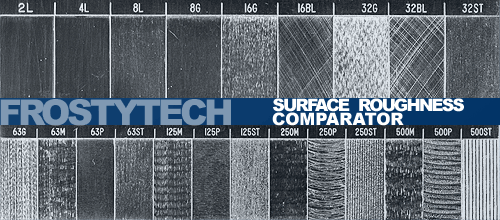
Surface Roughness Comparator: Surface finish is an important factor that we all look for when holding a new heatsink. Flipping a cooler over to see how well the base has been machined is a quick way to judge the attention to detail that was put into making it. The following FrostyTech Surface Roughness Comparator offers a concise cross section common machine surface finishes. Not every heatsink base will fit into the envelope of this gage, but it does offer a very handy set of representations. This commercially available gage has 22 machined surfaces from 2 to 500 microinches; Lapped (2, 4, and 8 µ" RA), Ground (8, 16, 32, and 63 µ" RA), Blanchard Ground (16 and 32 µ" RA), Shape Turned (32, 63, 125, 250, and 500 µ" RA), Profiled (63, 125, 250, and 500 µ" RA), and Milled (63, 125, 250, and 500 µ" RA).
The YS Tech fan used by Jetart is pretty loud, and will probably get on the nerves of anyone looking for a good quiet home PC heatsink. Gamers on the other hand shouldn't really mind. To listen to this heatsink for yourself in operation, be sure to click on the little headphones icon below and download the Acoustic Sample MP3 file.
Sound Level Measurements: Listening to the actual noise a heatsink makes allows you to hear what pure numbers alone cannot get across. To further emphasize FrostyTech's reliance on cold hard facts when evaluating a heatsink, we also take Decibel readings with a sound level meter. These results may be higher than the manufacturer's listed specs, but then again these are real world measurements. Measurements are made on the dB (A) scale.
We measured the noise levels of the JAKS29 at nearly 56 dBA, which clearly places this heatsink towards the louder side of our reference list. That sound is all care of the 5000RPM fan which ensures a steady stream of airflow down into the fins of the heatsink. Up next, the thermal results!
|
 |
|
| ||||||||||||||||||||||||||||||||||||||||||||||||||||||||||||||||||||||||||||||||||||||||||||||||||||||||||||||||||||||||||||||||||||||||||||||||||||||||||||||||||||||||||||||||||||||||||||||||||||||||||||||||||||||||||||||||||||||||
|
Find a Heatsink . Latest Heatsink Reviews . Top 5 Heatsinks Tested . Top 5 Low Profile Heatsinks . Top 5 Liquid Coolers . Heatsinks by Mfgr / Brand |
Social Media |
FrostyTech.com Info . Feedback . Contact Us / Heatsink Submissions . Submit News . Privacy Policy |
 | |
© Copyright 1999-2025 www.frostytech.com All Rights Reserved. Privacy policy and Terms of Use Images © FrostyTech.com and may not be reproduced without express written permission. Current students and faculty of accredited Universities may use Frostytech images in research papers and thesis, provided each image is attributed. | ||||