TOP 5 Heat Sinks TOP 5 Low Profile Heat Sinks TOP 5 Liquid Coolers
Heatsinks by Brand / Mfgr Reviews + Articless Advanced Search
|
TOP 5 Heat Sinks TOP 5 Low Profile Heat Sinks TOP 5 Liquid Coolers Heatsinks by Brand / Mfgr Reviews + Articless Advanced Search |
Thermalright CB-6L Heatsink Review
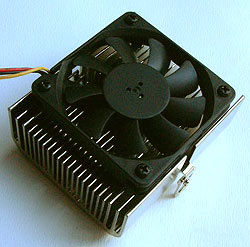
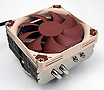
Thermalright broke all the cooling barriers with the introduction of their full-copper SK-6 heatsink and many people expected the CB-6L to follow in the same footsteps. The difference this time around is that the CB-6L is only partially copper, and more importantly, doesn't employ highly efficient thin-fin construction. Rather we are faced with a typical aluminum legacy extrusion which has seen some upgrades in an attempt to improve its's overall performance characteristics. The additions include plating the entire heatsink so that a 2mm thick copper base plate can be affixed to the base via solder. Other manufacturers have attempted similar upgrades to existing extrusions by mechanically attachments or thermal adhesives - usually with less than ideal results. Will the CB-6L be the one technology to shine on? The answer is possibly, but since we are now in the times of high performance fans and full copper thermal solutions it will have stiff competition to face up against.
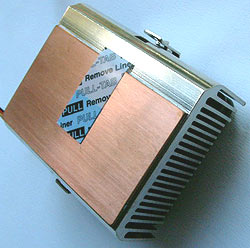
More on the CB-6L: There seems to be an active movement by some manufacturers to tag copper heatspreaders onto the base of existing aluminum extrusion design heatsinks. As if to extend the lifespan of their expensive extrusion dies, all manner of attachment methods have been attempted to get the copper to stick to the aluminum. Under normal circumstances you can't solder copper to aluminum, so some companies have resorted to bolting on plates, gluing them with thermal epoxy, or in the case of Thermalright, soldering. Of the three methods we mentioned solder is apt to be the best form of thermal joint. The problem is that aluminum isn't that receptive to soldering attempts, so a another coating of a more workable metal is needed.
In this case the aluminum extrusion has been plated with a metal that enables the manufacturers to solder the 2mm thick copper plate to the base of the CB-6L, hopefully improving the overall performance of an otherwise standard aluminum extrusion.
|
 |
|
| |||||||||||||||||||||||||||||
|
Find a Heatsink . Latest Heatsink Reviews . Top 5 Heatsinks Tested . Top 5 Low Profile Heatsinks . Top 5 Liquid Coolers . Heatsinks by Mfgr / Brand |
Social Media |
FrostyTech.com Info . Feedback . Contact Us / Heatsink Submissions . Submit News . Privacy Policy |
 | |
© Copyright 1999-2025 www.frostytech.com All Rights Reserved. Privacy policy and Terms of Use Images © FrostyTech.com and may not be reproduced without express written permission. Current students and faculty of accredited Universities may use Frostytech images in research papers and thesis, provided each image is attributed. | ||||